






“Not only have you met the expectations of the School of Education’s founders, but in many ways, you have far exceeded them,” said PAFF President Jerzy Koźmiński during the School of Education’s 10th-anniversary celebrations.
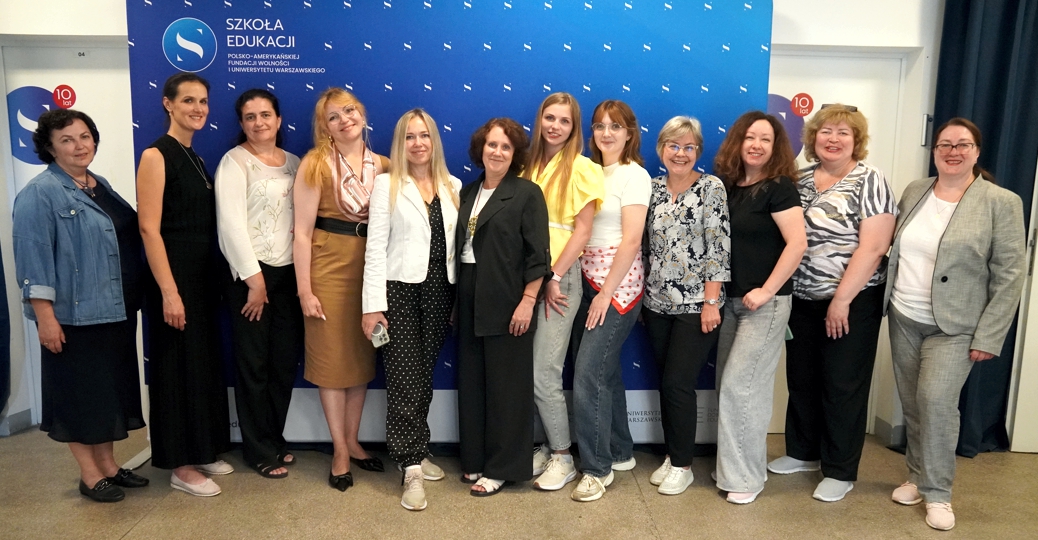
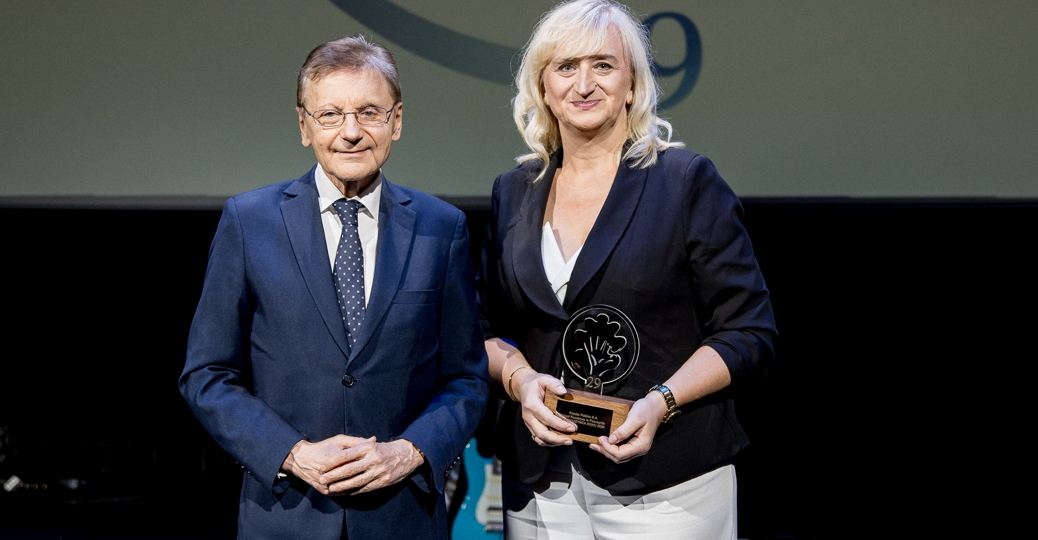
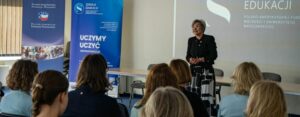
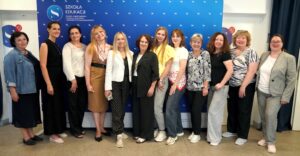
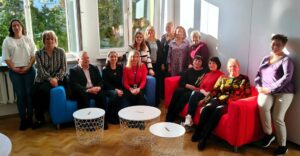
The School of Education of Polish-American Freedom Foundation and University of Warsaw is celebrating its 10th anniversary. It made an opportunity to sum up a decade of teacher training and discuss the future of education. The ceremony was attended by His Magnificence the Rector of University of Warsaw Prof. Alojzy Z. Nowak, PAFF President Jerzy Koźmiński, representatives of University of Warsaw’s management and departments, as well as numerous nongovernmental organizations collaborating with the School of Education.
“Ten years ago, we didn’t realize how important this approach to education was. Today, we understand it and see its results,” emphasized the Rector of University of Warsaw, Prof. Alojzy Z. Nowak. “You teach not only how to transfer knowledge, but above all how to ask questions and seek answers together. These are key skills, because in today’s world, the most important challenges cannot be solved alone. Methods based on openness, cooperation, and respect for others have universal value. “We are proud of you and thank you for what you are doing for Polish education,” added the Rector of University of Warsaw.
“Ten years ago, one of our first tasks was to reach out to people who could form an excellent teaching team. And we succeeded—something that today, looking back over the past decade, can be fully confirmed,” said Jerzy Koźmiński, President of PAFF, during the ceremony. He also listed some of the School of Education’s greatest achievements: nearly 420 program graduates, who are highly sought after in the job market; 12,000 trained educators; the development of the Critical Reading method and the popularization of the Thinking Classroom method in Poland; initiatives in support of Ukraine; and the staff’s direct involvement in reforming the education system. The PAFF president also highlighted how quickly the School of Education responded to the greatest challenges facing the Polish education system in recent years: the reform and elimination of lower secondary schools, the pandemic and the need to introduce remote learning, the mental health crisis among children and youth, the Russian invasion of Ukraine and the resulting wave of refugees, and finally, the spread of disinformation and the rapid development of artificial intelligence. “The intentions that guided the founders of the School of Education 10 years ago have been fulfilled, and in several respects, the results have far exceeded our expectations,” added Jerzy Koźmiński.
“Nothing here is ordinary,” said Prof. Jolanta Sujecka-Zając, Director of the School of Education, “from the scale of cooperation between PAFF and the University of Warsaw, through the on-campus format of our graduate programs, to the staff for whom nothing is impossible.”
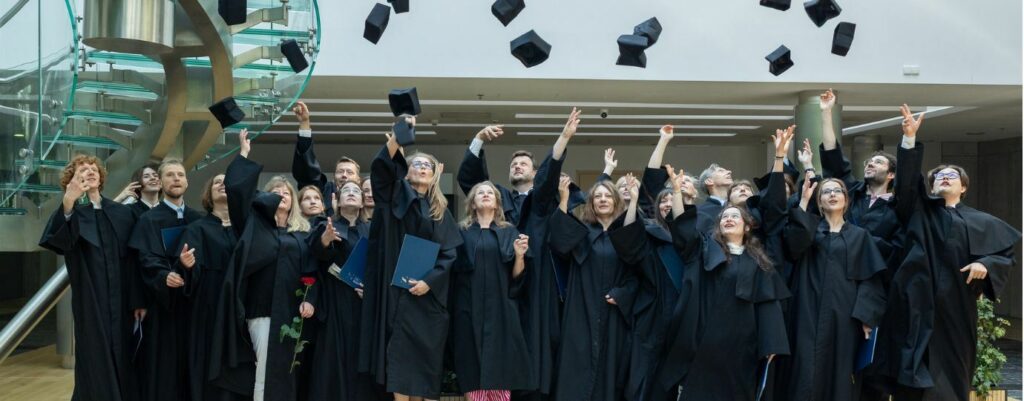
The Tenth Cohort of Students Received Their Diplomas
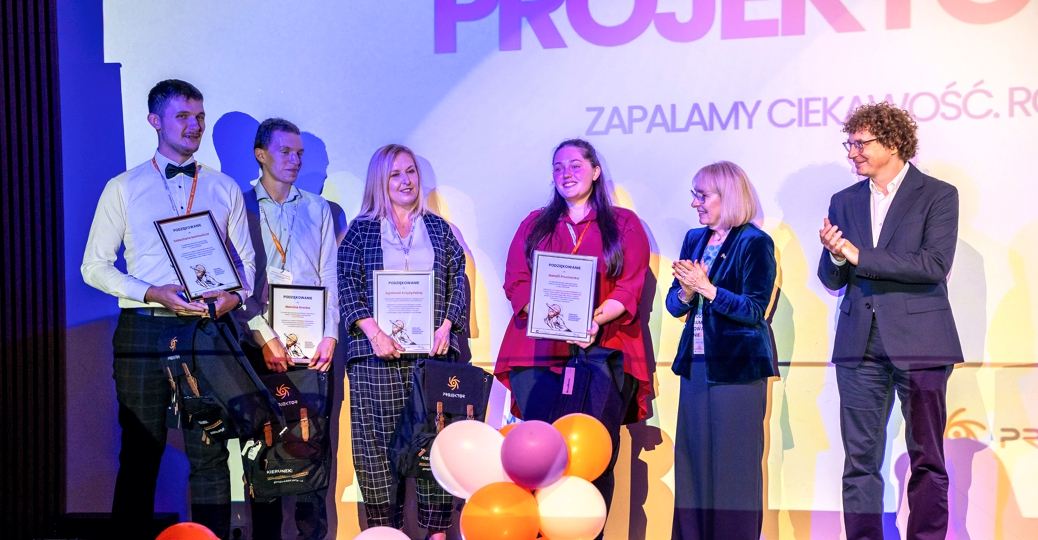
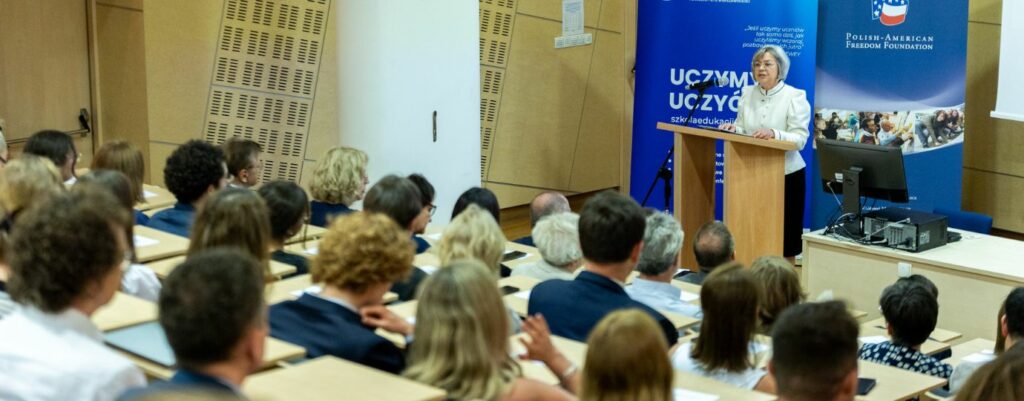
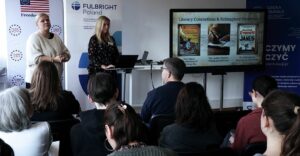
The 10th-anniversary celebration was combined with the ceremonial closing of the academic year and the graduation of the class of 2025/26. As always, attendees had the opportunity to hear presentations from students who spoke about selected aspects of their professional development as teachers.
Mathematician Piotr Konior had previously worked with great success for many years in the financial sector. However, he began to feel that it was time to repay his debt to society. “When I came here, I had certain teaching intuitions. The School of Education allowed me to name and organize them, and then transform them into coherent tools. Give students a problem that’s interesting and relevant to them—such as these exercises—and they’ll want to work. Different levels and needs among students? The solution is varied instruction and appropriate monitoring,” said the newly certified math teacher.
Biologist Julia Dąbkowska, in turn, emphasized how important the Teacher Development Standards developed by the School of Education were to her. “Just as the immune system learns through contact with pathogens, students learn through experiences and challenges. Doing too much for students robs them of their independence. A lesson that fosters independence and learning from one another may seem harder to conduct, but it’s much more effective. This aspect of strengthening student autonomy was the most important challenge for me in the NSR,” Julia noted in her presentation.
Prof. Maciej Raś, Vice Rector for Student Affairs and Educational Quality, personally congratulated the graduates of the School of Education, emphasizing how deeply impressed he was by their reflections on teaching practice.
Free Teacher Training Programs at the School of Education
The School of Education is a joint initiative of University of Warsaw and Polish-American Freedom Foundation. It offers free postgraduate programs leading to teaching certification in four tracks: Polish language, history and social studies, mathematics, and biology with natural sciences. Students can apply for a scholarship of 2,500 PLN per month, which last year was awarded to more than 90% of students. Students from outside Warsaw can also apply for free housing in a dormitory.
Applications are currently being accepted for free teacher education programs for the 2026–27 academic year. Details can be found at www.szkolaedukacji.pl